Choosing the Right Laser Level for Your Site: Rotary vs Dual Grade Explained
- by CamHealy
- in Construction Series
- on January 20, 2026
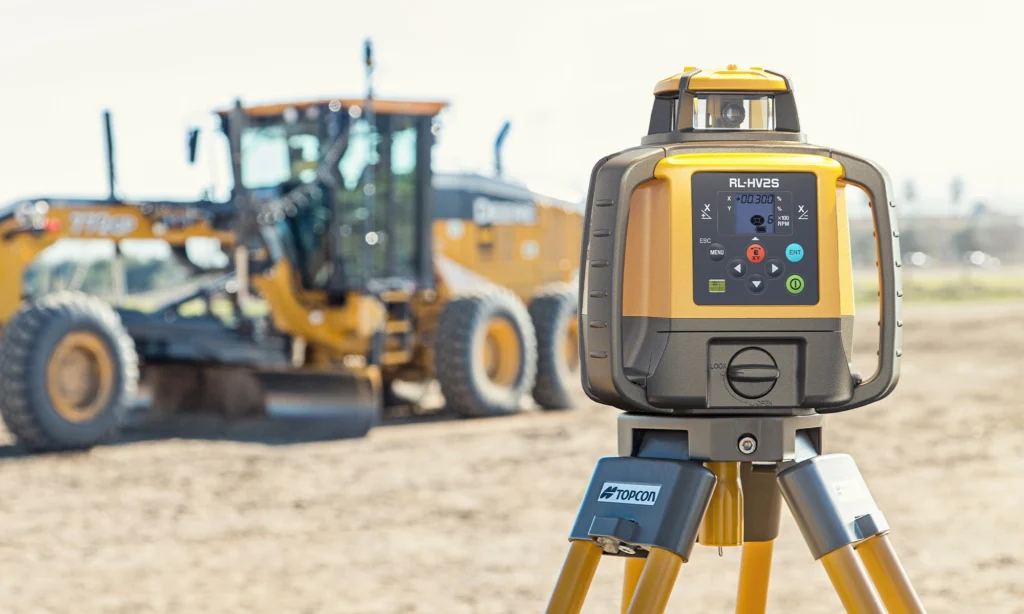
Laser levels are important instruments to have on every site. You’re hamstringing yourself without them. But how do you know you’re picking the right one for your project? Distinguishing between rotary and dual grade models isn’t always straightforward. Here’s how to figure out which one is perfect for you…
Not Sure Which Laser Is Right for Your Project?
Every site is different. If you're unsure whether a standard rotary or a dual-grade laser is best for your job, our team can advise based on your ground conditions, distances and required accuracy.
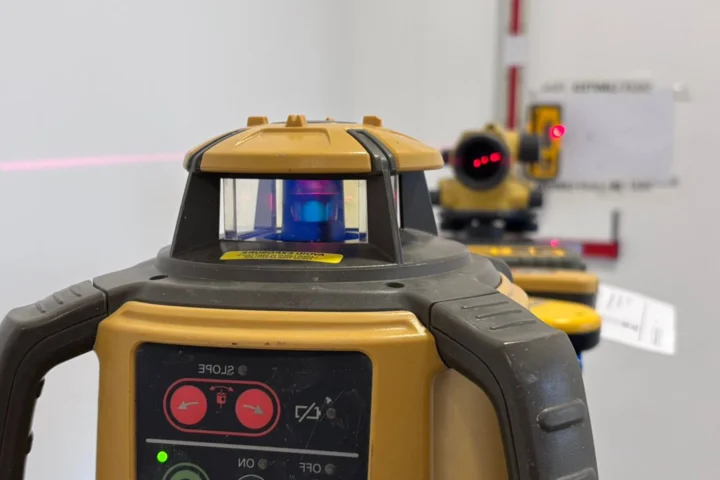
Rotary lasers project a perfectly level beam spinning at 360 degrees through a rotating head at the top of the model which creates an exact reference point for levelling for the user. Typically, these lasers are best used for general levelling, setting out, and interior work.
Comparatively, dual-grade lasers allow the user to adjust the gradients on two axes to create slopes via either the conventional remote controller, or, in some more recent models, by pairing your mobile phone with the laser using an app. The ability to alter the axes when using dual-grade models makes them ideal for drainage works, landscaping, and car parks.
Ready to Hire?
We stock both standard rotating lasers and dual-grade models for short and long-term hire — all fully checked and calibrated before dispatch.
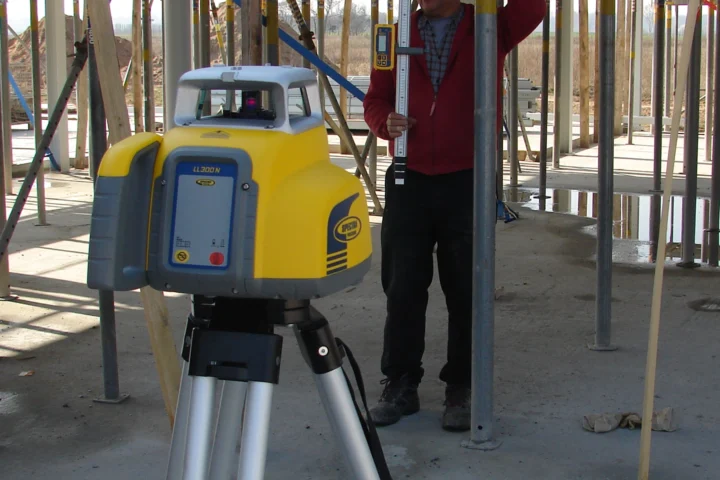
Oftentimes both are best utilised with a receiver/detector to detect the beam as it can be obscured in sunlight or more difficult to track over longer distances. The receiver is typically fixed on a pole adjacent to the laser and contains sensors which recognise the spinning beam, as well as being programmed with audio and visual cues to help the user with determining an exact level plane or adjusted axis.
How You Should Set-up Your Lasers
When setting up your laser, you should start by placing your tripod on firm ground—avoid soft surfaces and standing water—and placing your laser on top of the tripod. It’s also important to warm up the instrument if it’s stored in a cold place to avoid drift.
Then you ought to check zero with a quick two-peg test or a simple cross-check on known points. Once again, make sure you use a detector depending on distance and visibility. After checking, confirm at least two reference points before you proceed.
Need Your Laser Checked or Calibrated?
Accuracy depends on proper calibration. If your laser hasn’t been checked recently, our service team can test and calibrate it to manufacturer standards.
Mistakes You Should Avoid
• Leaning tripods and loose clamps; make sure they’re secure and steady! Otherwise, you risk gradual fall across the site.
• Ensure that your batteries have enough charge as low-power ones can cause unstable readings and references in poorer laser models. Keep you batteries charged up.
• Not everyone remembers to run checks when moving the setup; don’t let that be you!
• Lastly, it may sound silly, but site workers still manage to do it: forgetting to lock the head during transport. Don’t be that guy. Please.
Common Questions
Can I set a gentle fall with a rotary laser? Not directly. Some models allow single-grade, but true two-axis control can only be found in a dual-grade laser.
What specific winter accessories can I use? A rain cover is always handy, as are spare batteries and a reliable receiver. A high-visibility staff face can also improve readings in poor light.
In summary, choose rotary for general levelling and interiors; pick dual‑grade when controlled fall is the priority. Either way, solid setup habits and quick checks are what deliver accurate results.
Still Deciding?
Rotary lasers are ideal for general levelling and internal work. Dual-grade lasers are the right choice when controlled fall and drainage accuracy matter.
If you'd like straightforward advice — without the technical jargon — just give us a call. We’ll recommend the right tool for your site.
Tags: Civil Engineering, Construction, How‑to Guides, Levelling, Site Setup, Surveying, Tools & Equipment