Do You Need a GNSS Rover — or a Base & Rover? A Practical Guide for Engineers
- by admin
- in Geospatial Series
- on December 2, 2025
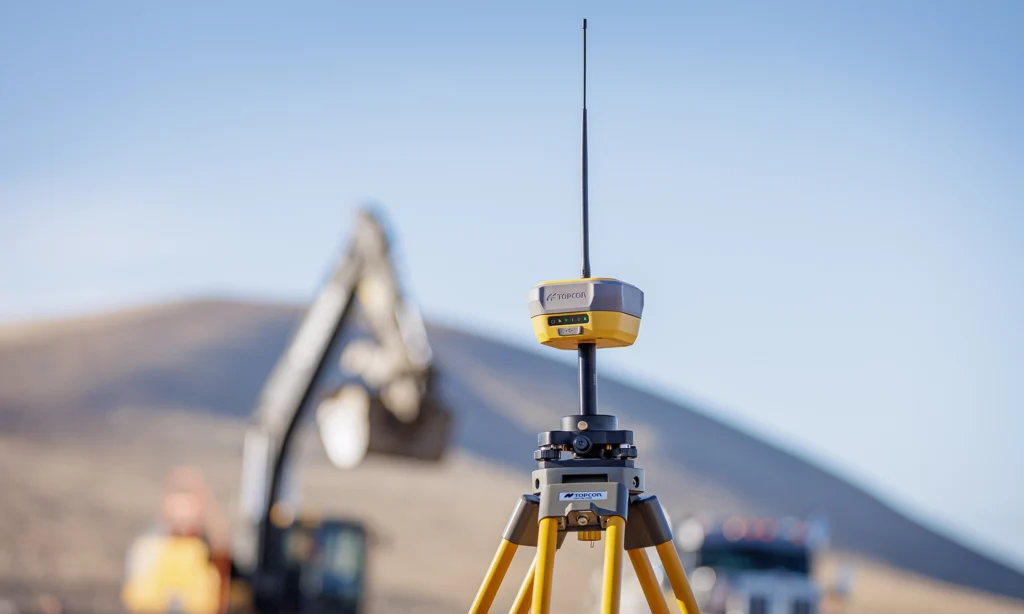
Choosing the right GNSS setup is one of the most common challenges for site engineers, surveyors and contractors. You hear the terms rover, base and rover, network corrections, RTK, PPK — and you’re expected to know which combination is right for the job, the accuracy required, and the conditions you’re working in.
A simple mistake in configuration or equipment choice can cost a contractor thousands in rework, delays, and incorrect levels. Yet equally, many engineers overspend on equipment when a single rover would have been perfectly adequate.
This guide breaks down when you need a rover only, when you need a base and rover, and what affects accuracy on a live site. We’ll also look at the real-world implications of using the wrong system and how to choose the right approach for the work you’re doing.
Jump to: What a GNSS rover actually does | When to use a rover | When to use a base and rover | The Pros and Cons of each | Real world scenarios | What if I make the wrong choice | How JB Survey can help you
What a GNSS Rover Actually Does
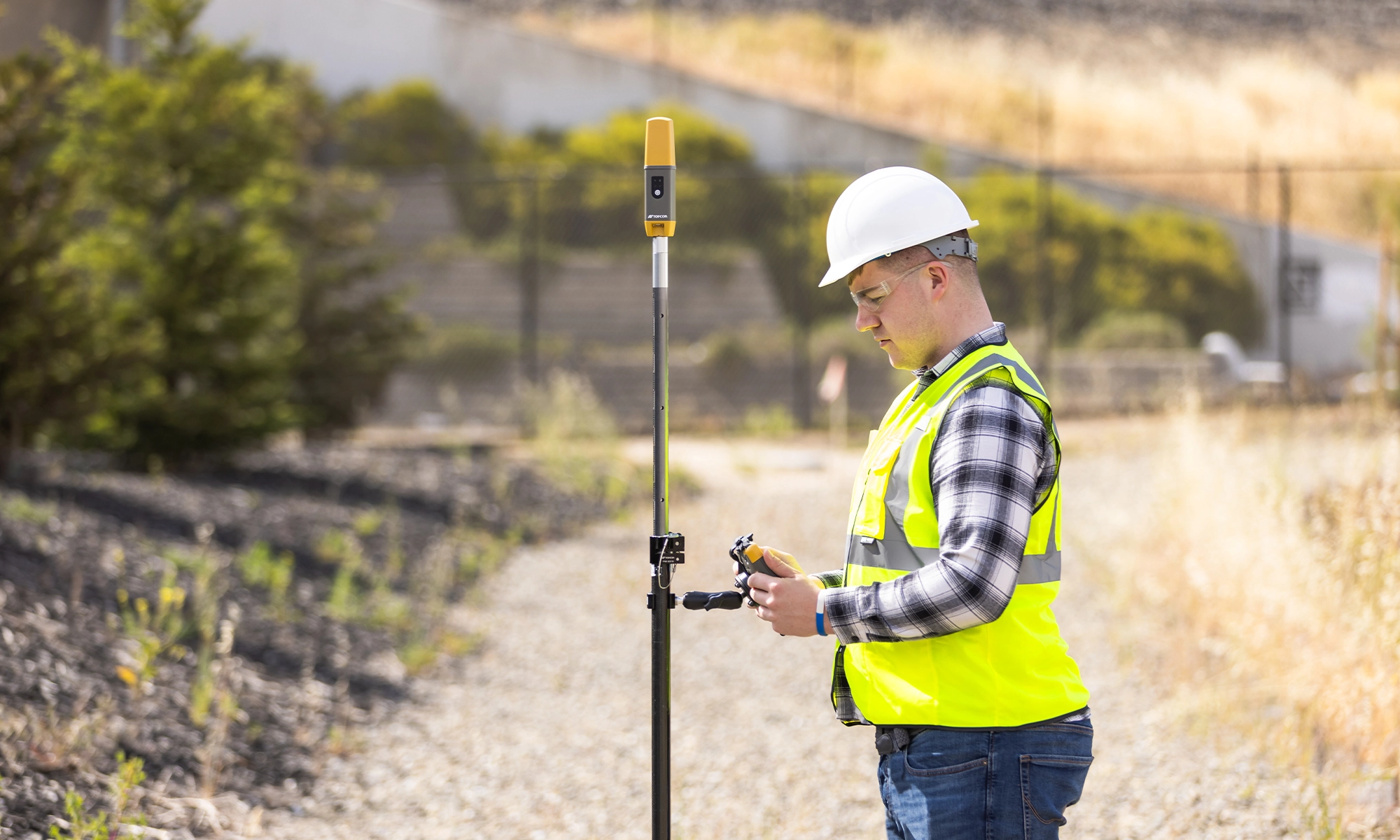
A GNSS rover is the position-reading unit you walk around site with. It receives satellite signals and, with the right corrections, gives you high-precision coordinates for:
- Setting out
- As-built data
- Boundary checks
- Topographical surveys
- Utility mapping
On its own, a rover can only read satellite positions passively. Without corrections, this produces errors ranging from 0.5–5 metres, which is useless for most construction tasks.
To achieve the millimetre-to-centimetre accuracy that modern construction demands, the rover must receive Real-Time Kinematic (RTK) correction data. This correction can come from one of two places:
- A network correction service (often called TopNET, SmartNet, etc.)
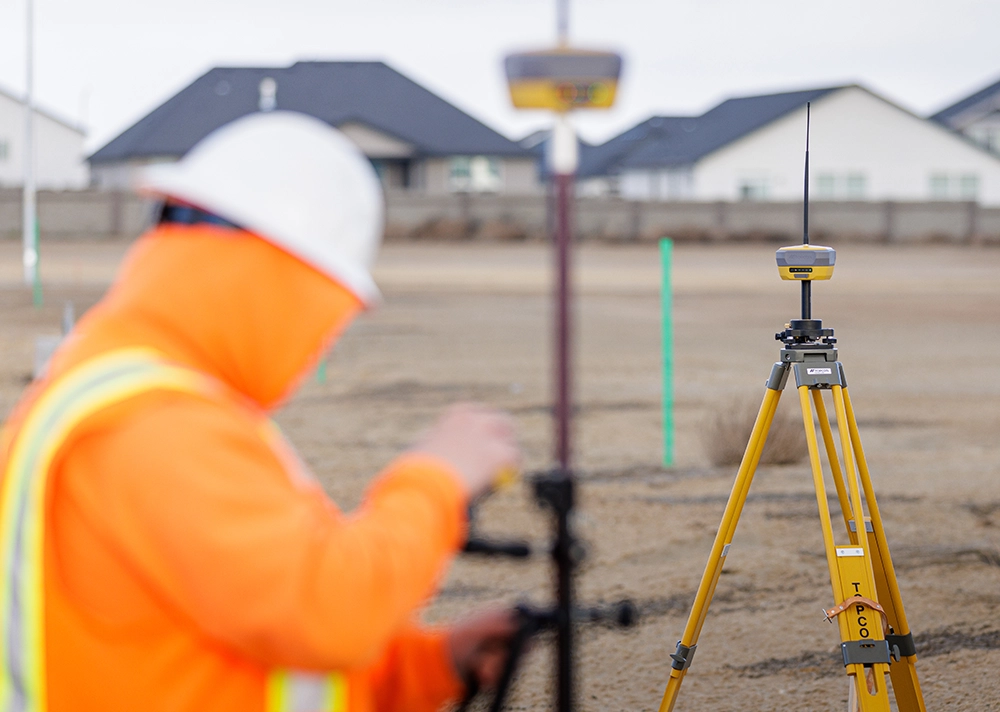
- Your own local base station (a second GNSS receiver acting as the reference point)
This decision — network or local base — is where most confusion starts.
When a GNSS Rover On Its Own Is Enough
A standalone rover (with a network correction subscription) is typically enough when:
✔ You have good mobile data coverage
Most network RTK services rely on 4G/5G. If your site is in an urban or semi-urban area, reliability is usually excellent.
✔ You’re working on single plots or small-medium construction sites
A network rover is ideal for:
Housebuilding sites
Commercial buildings
Utilities and drainage
Landscaping
Kerbs and edging
Small civil engineering schemes
Accuracy is consistent across the site because the correction signal comes from the wider reference network, not one local point.
✔ You need fast setup with minimal equipment
A rover-only workflow is simple:
Switch on
Connect controller
Select correction service
Start work
For many modern engineers, the simplicity and mobility are major benefits.
✔ You need to move between multiple sites
If your crews work across several live projects, a rover with network corrections avoids moving a base station repeatedly.
In Summary: A Rover Only (with network RTK) is sufficient when:
- You have reliable mobile signal
- Survey areas are small to medium
- You need “grab and go” workflows
- You’re doing typical setting out or topo work
- You need minimal equipment to manage
For a large percentage of construction projects, this is the most cost-effective choice.
When You Really Do Need a Base & Rover System
There are several scenarios where a base & rover is either recommended or essential. Even with excellent network RTK, a local base provides accuracy and reliability advantages when conditions aren’t ideal.
✔ Poor or no mobile data coverage
This is the number one reason contractors switch to a base:
Remote infrastructure projects
Rural groundworks
Forestry
Wind farms
Rail corridors
Quarry sites
If the rover can’t maintain a stable data link to the RTK network, the corrections drop out and accuracy is lost.
A local base creates your own small-scale, high-precision network that doesn’t rely on mobile towers.
✔ Deep or obstructed sites (cuttings, quarries, behind buildings)
Network RTK relies on two-way communication between:
Rover
Reference network
Mobile network mast
If the rover’s communication is obstructed by:
Embankments
Rebar cages
Retaining walls
Dense tree cover
Excavation profiles
…you may lose corrections or experience drift.
A base station located on site gives a stronger, more direct radio link.
✔ Large linear or high-accuracy engineering projects
For engineering requiring the highest precision (sub-centimetre), a local base station reduces:
Latency
Position noise
Network distance error
Typical examples include:
Precision concrete pours
Structural steel placement
Rail track geometry
Bridge works
Slipform paving
Distance from the correction source matters. A local base ensures the rover is never more than a few hundred metres from the reference origin.
✔ You need complete control over your coordinate system
Some contractors require absolute internal consistency — especially those managing long-term or multi-phase schemes.
With your own base station:
The coordinate origin never changes
You define your site datum
All your staff and subcontractors work from the same localised reference
This is especially useful when multiple rovers, machines or crews are working simultaneously.
✔ Machine control projects
Any machine control system (dozers, graders, excavators) will typically benefit from — or require — a base station on or near the project.
Reasons include:
Higher update rates
Reduced drift
Better repeatability
Consistent performance across a large area
If you're running both MC and site engineers on the same site, a shared base is the standard approach.
The Pros & Cons of Rover Only vs Base & Rover
Rover Only (Using Network Corrections)
Advantages
- Fast, simple deployment
- No extra hardware to manage
- Perfect for multi-site workflows
- Lower upfront cost
- Ideal for small–medium commercial or housing projects
Limitations
- Relies on mobile data
- Not suitable for some rural or obstructed environments
- Less control over site-specific coordinate systems
- May not meet the highest tolerances in demanding engineering work
Base & Rover System
Advantages
- Works without mobile coverage
- Highest level of accuracy and repeatability
- Best for complex engineering
- Full control over datum and coordinate system
- Essential for machine control
- Reduced corrections dropouts in obstructed areas
Limitations
- Higher cost (second receiver)
- Requires setup each day
- Needs safe placement and power strategy
- Requires more GNSS knowledge
Real-World Scenarios (Which System Should You Use?)
Scenario A: Housing development (20–200 plots)
Recommended: Rover only
Consistent, strong mobile coverage across housing sites usually makes network RTK the easiest and most cost-effective choice.
Scenario B: New link road in rural Scotland
Recommended: Base & rover
Mobile coverage is too unreliable. Accuracy requirements for road centre lines and levels demand stable corrections.
Scenario C: Drainage gangs moving between several local jobs daily
Recommended: Rover only
Speed and flexibility matter more than creating a site datum.
Scenario D: Bridge replacement with structural steel
Recommended: Base & rover
High-precision, repeatable measurements are essential.
Scenario E: Machine control deployment on a large infrastructure project
Recommended: Base & rover (possibly multiple bases)
Industry standard practice.
What Happens If You Choose the Wrong System
Mistakes aren’t usually catastrophic, but the consequences can be expensive:
❌ Inaccurate levels and linework
Even a 20–30mm error in early drainage works can lead to:
- Incorrect gradients
- Waterlogging
- Failed inspections
- Rework costs
❌ Downtime when corrections drop out
Loss of RTK means:
- Crews waiting around
- Abandoned set out
- Inconsistent data
❌ Unusable as-built data
Any as-built survey submitted with poor accuracy becomes a liability.
❌ Poor machine performance
Without stable corrections, machines will:
- Drift
- Cut to wrong levels
- Require manual rework
How to Choose the Right Setup for Your Company
Ask these questions:
- Do we work in remote or obstructed environments?
If yes → strongly consider a base & rover.
- Do multiple teams need to work from the same local coordinate system?
If yes → base & rover is best.
- Do we prioritise speed and simple setup?
If yes → rover only.
- Do we do high-precision engineering?
If yes → base & rover.
- Do we run machine control?
If yes → base station recommended.
Final Recommendation
Most contractors benefit from at least one rover with network RTK for everyday work — but having a base station available gives you autonomy, reliability, and accuracy when sites are more challenging.
A mixed fleet is often the best approach:
Rovers for general work
A base available when needed
Subscriptions as backup
This keeps costs manageable while ensuring you are never stuck due to poor corrections or mobile coverage.
Need Support Choosing a GNSS Setup?
JB Survey can help:
Demonstrations of Rover vs Base & Rover
Arrange an on-site demonstration or training for base, base & rover and software set ups tailored to your site
Same-day hire for complete packages
Topcon HiPer receiver packages available to collect same day from either of our branches. Next day delivery UK wide as standard
In-house calibration and testing
JB Survey are an authorised Topcon distributor and service centre - We can also support any software issues and updates
Subscription hire options through SurveyPlan
Why not hire through our new subscription service. Set monthly rate and priority support included
Tags: Base and Rover, Geomatics, GNSS. GPS, GPS Rover, Network Rover, PPK, RTK, Setting Out, SmartNet, TopNet