What Is Machine Control? A Practical Guide for Contractors
- by admin
- in Machine Control Series
- on December 5, 2025
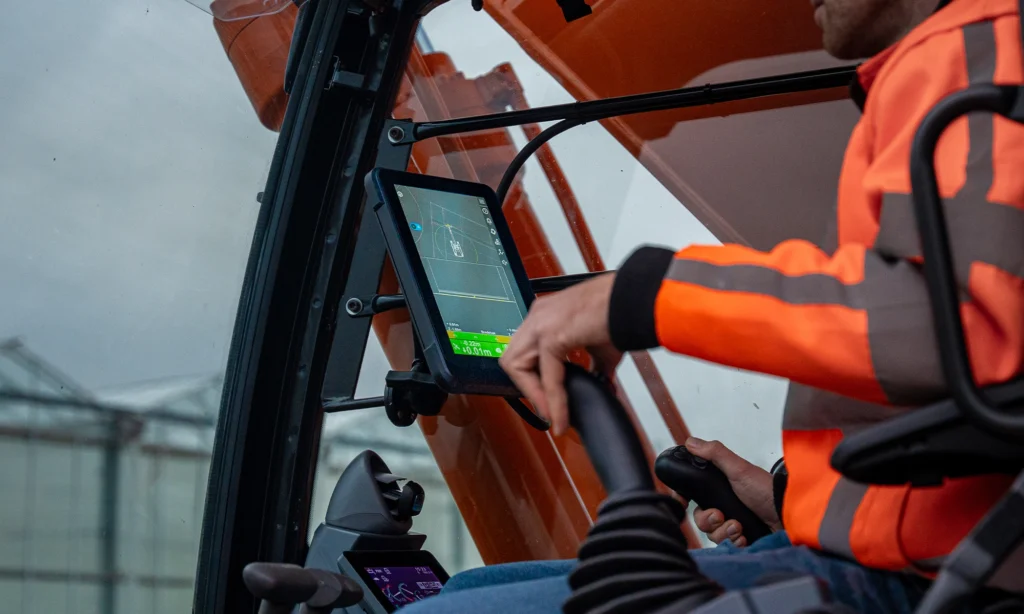
Machine control used to be a specialist tool reserved for major highways projects and large civil engineering contractors. Today, it's rapidly becoming a standard part of UK construction — on housing sites, earthworks projects, infrastructure schemes, drainage packages, and even smaller groundworks jobs.
But there is still a lot of confusion about what machine control actually is, how it works, what equipment it requires, and what benefits it brings. Many contractors assume it's too complicated, too expensive, or only suited to big projects. In reality, modern machine control systems are more accessible, more reliable, and more compatible with day-to-day engineering workflows than ever before.
This article explains machine control in clear, practical terms — not marketing jargon — so construction and plant teams can understand how it works, where it fits, and whether it’s right for your operations.
Jump to: What machine control actually is | The core components | 2D vs 3D machine control | What machines can have machine control | A simple guide to how it works | What it doesn't do | Where it delivers value | When it is not the right choice | What you need to start | What it costs | How JB Survey can help you
What Machine Control Actually Is (in Plain English)
Machine control is a technology that helps plant operators achieve accurate grades, levels, and shapes by using:
• GNSS (GPS)
• 3D models
• Sensors (angle sensors, IMUs)
• Lasers or total stations (depending on system)
• In-cab displays
Instead of relying entirely on:
• Pegs
• Stringlines
• Spray marks
• Engineer guidance
• Repeated checks
…the machine knows exactly where it is and how much material needs to be cut or filled.
In other words:
Machine control turns excavators, dozers, graders, pavers, and compactors into precision instruments that follow the engineer’s digital design.
The Core Components of a Machine Control System
A full 3D machine control system generally includes:
GNSS Receivers
Mounted on the machine to provide position.
IMU / Angle Sensors
Measure pitch, roll, rotation, mast angle, boom position, etc.
In-Cab Display / Controller
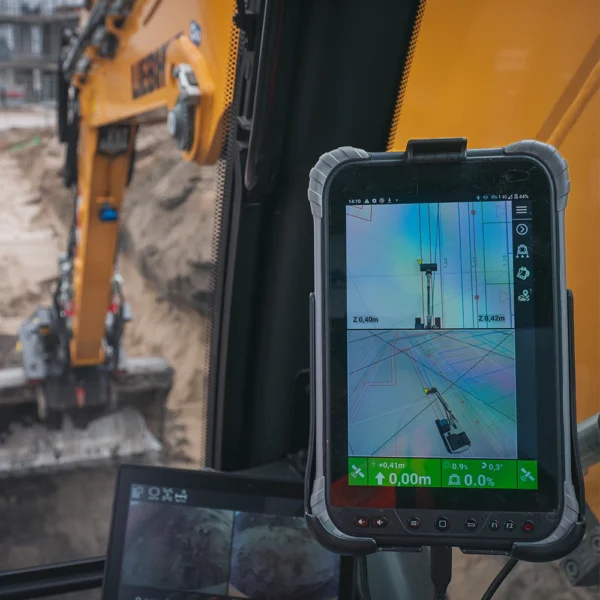
Shows the operator a digital version of the design and live cut/fill values.
Radio or Network Corrections
Provide centimetre-level accuracy.
3D Design Model
The engineered surface or alignment the plant must follow.
ECUs / Control Modules
Drive the hydraulics on automatic systems.
Antennas, cables, brackets, mounts
Machine-specific installation fixtures.
2D vs 3D Machine Control (Quick Overview)
2D Machine Control
Uses:
• Laser receivers
• Slope sensors
• Depth sensors
Good for:
• Simple levels
• One flat plane
• One slope
• Kerbing
• Basic drainage
Limitations:
• Can’t follow complex 3D shapes
• Requires manual adjustments
• Operator skill remains critical
3D Machine Control
Uses:
• GNSS
• Total station tracking (in some systems)
• 3D digital models
Good for:
• Complex shapes
• Varying gradients
• Earthworks models
• Roads and highways
• Housing sites
• Quarry faces
• Major infrastructure
Benefits:
• Follows the engineered surface directly
• Much less rework
• Consistent results regardless of operator skill
What Machines Can Have Machine Control?
Machine control is available for:
✔ Excavators
Depth control, slope management, trenching, batters, shaping.
✔ Dozers
Blade control for bulk earthworks and fine grading.
✔ Graders
High-accuracy blade control for finish-level precision.
✔ Pavers & Milling Machines
Digital control of depth and slope.
✔ Compactors
Intelligent compaction monitoring and pass management.
✔ Tractors, scrapers, specialist plant
Depending on system.
Machine control continues to expand to new platforms as adoption increases.
How Machine Control Works (Simple Explanation)
Machine control operates by constantly comparing where the machine is to where the design says it should be.
Step-by-step:
- GNSS determines the position of the machine
- Sensors determine the position of the boom/blade
- The 3D model provides the design height
- The system calculates cut/fill values
- The operator follows the guidance (or lets the system automatically adjust hydraulics, depending on system)
This happens many times per second.
For the operator:
- They simply follow the screen
- The system shows how far up/down/left/right they are from design
- No repeatedly waiting for engineers
- No guessing
- No stakes or pegs needed
Why Contractors Use Machine Control (Real Benefits)
Forget the glossy brochures — these are the practical benefits contractors see every day.
Faster Progress
Machines achieve target levels and shapes much quicker.
Less Over-Dig / Rework
One of the biggest cost-savers:
- Less muckaway
- Less aggregate import
- Less refilling
- Less re-shaping
Reduced Labour
Fewer engineers needed for constant checking.
Greater Consistency Across Operators
Even newer operators can achieve high accuracy.
Better Safety
No one walking across working areas telling machines where to cut.
Full Digital Record
Some systems record every pass — essential for QA and disputes.
Higher Accuracy
Keeps the entire job within tolerance automatically.
What Machine Control Doesn’t Do
There are a lot of misconceptions.
❌ It does not replace engineers
Surveyors are still required for:
Models
Control
Validation
Check surveys
❌ It does not fix bad designs
The machine follows the model — good or bad.
❌ It does not work everywhere
GNSS limitations apply (more on that in Article 4).
❌ It does not eliminate training
Operators still need to understand what the system is showing.
Knowing what machine control can’t do is as important as knowing what it can.
Where Machine Control Delivers the Biggest Value
Earthworks / Bulk Dig
Massive efficiency gains.
Roads & Highways
Consistent levels, crossfalls, cambers.
Housing Infrastructure
Plot levels, drainage, driveways, access roads.
Car Parks & Commercial
Accurate layer construction reduces material waste.
Utilities / Deep Drainage
Excavators achieve perfect depth and gradient.
Quarries
Digital benching and face management.
Rail
Precise geometry and tight tolerances.
Major Civils
Large-scale design surfaces = perfect match for 3D MC.
When Machine Control Is NOT the Right Choice
Machine control is not universal.
Not ideal when:
- GNSS is blocked or unreliable (deep urban areas, forests, tunnels)
- Work area is too small to justify system setup
- Design is extremely simple (small pad, single level)
- You have highly-skilled operators capable of achieving fine tolerance manually
- There is no reliable digital design model
If a project has very low complexity, the investment might not pay off.
What You Need Before You Start Using Machine Control
Machine control is only as good as the inputs.
Good site control points
If the control is wrong, everything is wrong.
A clean, well-built 3D model
Design errors = machine errors.
Consistent GNSS corrections
Network or base — must be reliable.
Operator training
Short but crucial.
A clear workflow between engineer → modeller → machine
Avoids version mix-ups and outdated models.
What Machine Control Costs
Ballpark figures (varies by vendor and configuration):
• 2D systems: £7,000–£18,000
• 3D excavator systems: £22,000–£35,000
• 3D dozer/ grader systems: £40,000–£85,000
• Paving/milling systems: £70,000–£150,000+
Alternatively:
• Hire: weekly or monthly
• Subscription: predictable monthly payments (SurveyPlan)
Who Should Consider Machine Control?
Machine control is particularly suited to contractors who:
✔ Spend money on rework
✔ Move large volumes of earth
✔ Have variable operator skill levels
✔ Run multiple projects simultaneously
✔ Want to reduce labour or engineer waiting time
✔ Need predictable output and accuracy
✔ Are scaling or modernising operations
In short — most civils contractors.
The Biggest Barriers (and Why They’re Mostly Myths)
“It’s too expensive.”
Rework, over-dig and wasted material cost far more.
“It’s too complicated.”
Modern systems are extremely operator-friendly.
“We don’t have time to train our operators.”
Training usually takes hours, not weeks.
“Only big contractors use it.”
Machine control is now used on housing sites and small civils projects every day.
Conclusion
Machine control isn’t a luxury anymore — it’s becoming a core part of efficient, modern construction. It speeds up work, reduces errors, and makes contractors more competitive, even in tight-margin markets.
With the right design data, good site control, and proper support, machine control quickly becomes one of the most valuable tools on site. Whether you’re running excavators, dozers, graders or paving machines, digital guidance gives you the accuracy and consistency that today’s projects demand.
JB Survey supports UK contractors with:
- Machine control sales
- Full installation
- Hire and subscription models
- Training for operators
- Site preparation and workflow support
- ServicePlus maintenance
- Troubleshooting and workflow optimisation
Machine control isn’t just about upgrading plant — it’s about upgrading productivity, certainty, and precision across your entire operation.
Will machine control work for you?
JB Survey can help:
Demonstrations of equipment and software
Arrange a demonstration or training for the Topcon MC Max, MC Mobile or software
Fast hire for cab packages
Topcon MC Max cab kits available to hire, installation included on any pre-wired machines
In-house calibration and testing
JB Survey are an authorised Topcon distributor and service centre - We can also support any issues and fault find on site
Subscription hire options through SurveyPlan
Why not hire through our new subscription service. Set monthly rate and priority support included
Tags: machine-control